Home / Interior Doors / Door core guide
Solid-core doors feel heavier and generally cut down more sound between rooms. Hollow-core doors are lighter and often cost less. The right choice depends on how much quiet you need, what your frame can support and what you want to spend.

These sample cutaways show two common constructions beneath the door face.
The core is the material between the door faces. Compare the construction and weight of the actual models you are considering.
01
A dense interior gives the door more weight and generally helps dampen sound. Solid core describes what is inside the panel. It does not necessarily mean solid lumber.
02
A lightweight internal support holds the two faces apart. These panels are easier to handle and suit openings where closing off a space matters more than reducing noise.
03
Sound also passes through gaps around a closed door. A denser panel alone cannot promise a quiet room. Ask about the fit at the jamb and under the door when noise is a priority.
Once you know the core you want, compare interior-door supply options.
Two doors with the same face can differ in purchase price, weight and sound control. Put your budget toward the openings where those differences will be noticeable.
01
Start with a solid-core model for a bedroom beside the TV or an office beside the kitchen. The denser panel can reduce sound through the door.
Large gaps around or under the door leave another path for sound. Ask about the complete opening if speech privacy is critical.
02
Consider a lighter hollow-core model for a linen closet and a solid-core panel for the occupied room beside it.
Ask which face profiles and finishes are available in both cores. A matching photograph does not confirm matching models.
03
Compare the weight of the new slab with the existing panel. A heavier choice may affect hinges and preparation.
Have the frame and hinge attachment assessed if fit or support is uncertain. Compare a prepared slab and a framed unit if the jamb also needs attention.
Start with what happens on either side of the opening when the door is closed.
If one person sleeps while others use the hall or living room, consider a solid-core panel. Ask about the hinges needed for its weight and choose privacy hardware separately.
For calls and focused work, a heavier door may help soften nearby conversation. Check the clearance at the floor and frame as well as the core.
A lightweight panel is often a practical choice when the door mainly keeps stored items out of view. The handle and swing can matter more than acoustic performance here.
Compare matching face profiles in different constructions. You may be able to use a heavier bedroom door and a lighter closet door while keeping a consistent finish.
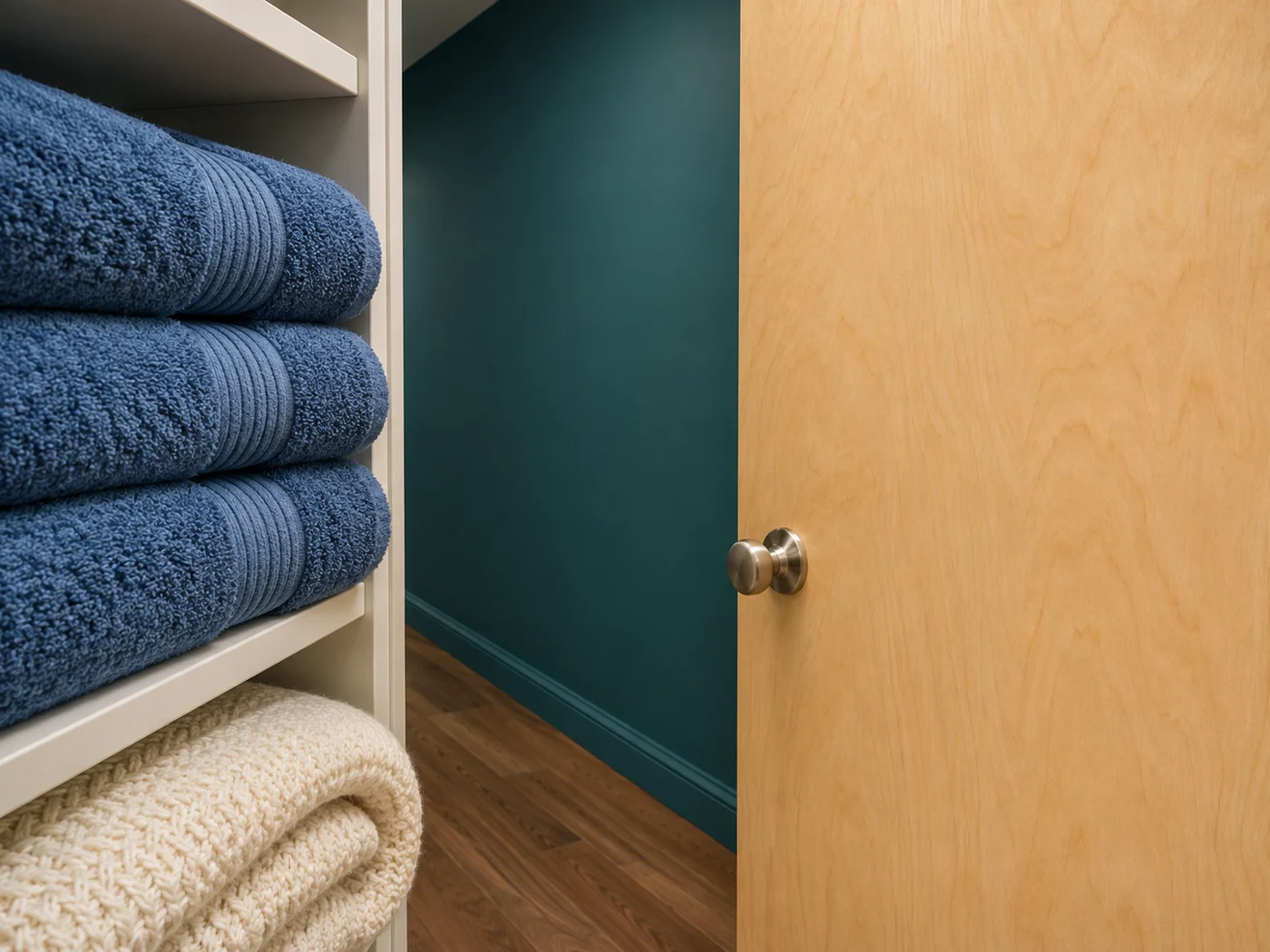
A linen closet can use a lightweight panel when sound control is a lower priority.
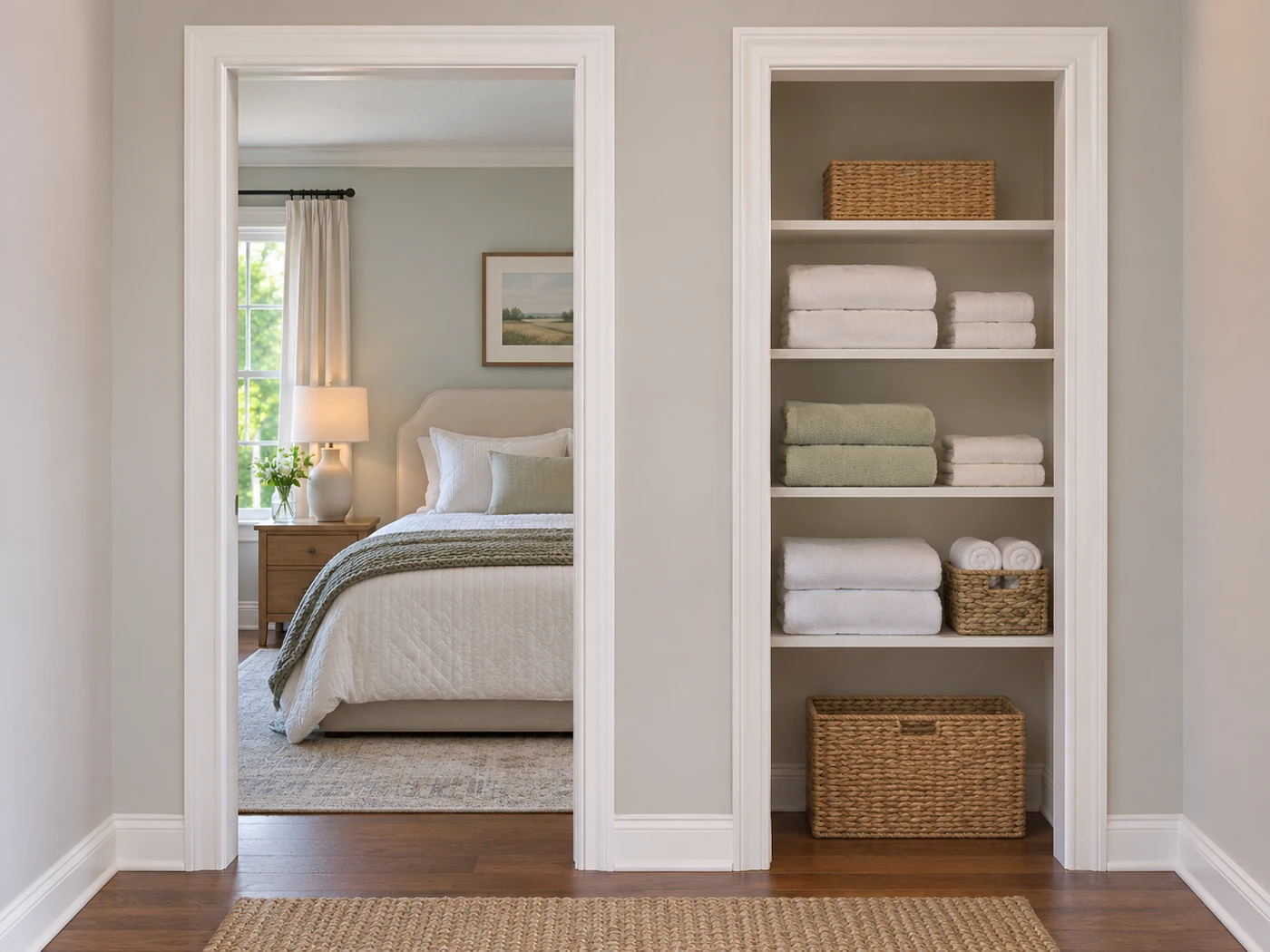
Illustrated room comparison. A bedroom and linen closet along one hallway can call for different cores.
Suppose hallway conversation wakes the person in the bedroom, while the closet only stores towels. Compare a denser bedroom panel and a lighter closet panel in the same finish. Price the pair with the right hinges and handle for each opening. If the bedroom has a large gap below it, discuss the gap before spending more on the core alone.
When two panels look alike, compare their weight, price, finish and the preparation each needs for your frame. Those details can help you decide whether a heavier panel is worth the extra cost for your bedroom.
We can help you compare sound control, weight and price for the room you have in mind.